The Chrome time tracking extension that gets out of the way
Hourcraft is a free time tracker that docks in Chrome’s side panel — beside your tabs, not buried among them. Start a task in one tap, watch the toolbar badge count the minutes, and get back to work. Track billable hours, focus blocks, or just where the day actually went; every session lands in the same history as the Hourcraft web app.
Add to Chrome — it’s freeTime tracking beside your tabs, not behind them
Press Ctrl+Shift+Y (⌘+Shift+Y on a Mac) and Hourcraft docks beside the page you’re working on — a side panel time tracker instead of one more pinned tab. The live toolbar badge shows elapsed time even with the panel closed, so a forgotten timer never runs into the night. One tap to start, one to stop — the productivity win is everything you stop doing: no tab-hunting, no opening a dashboard just to check the clock.
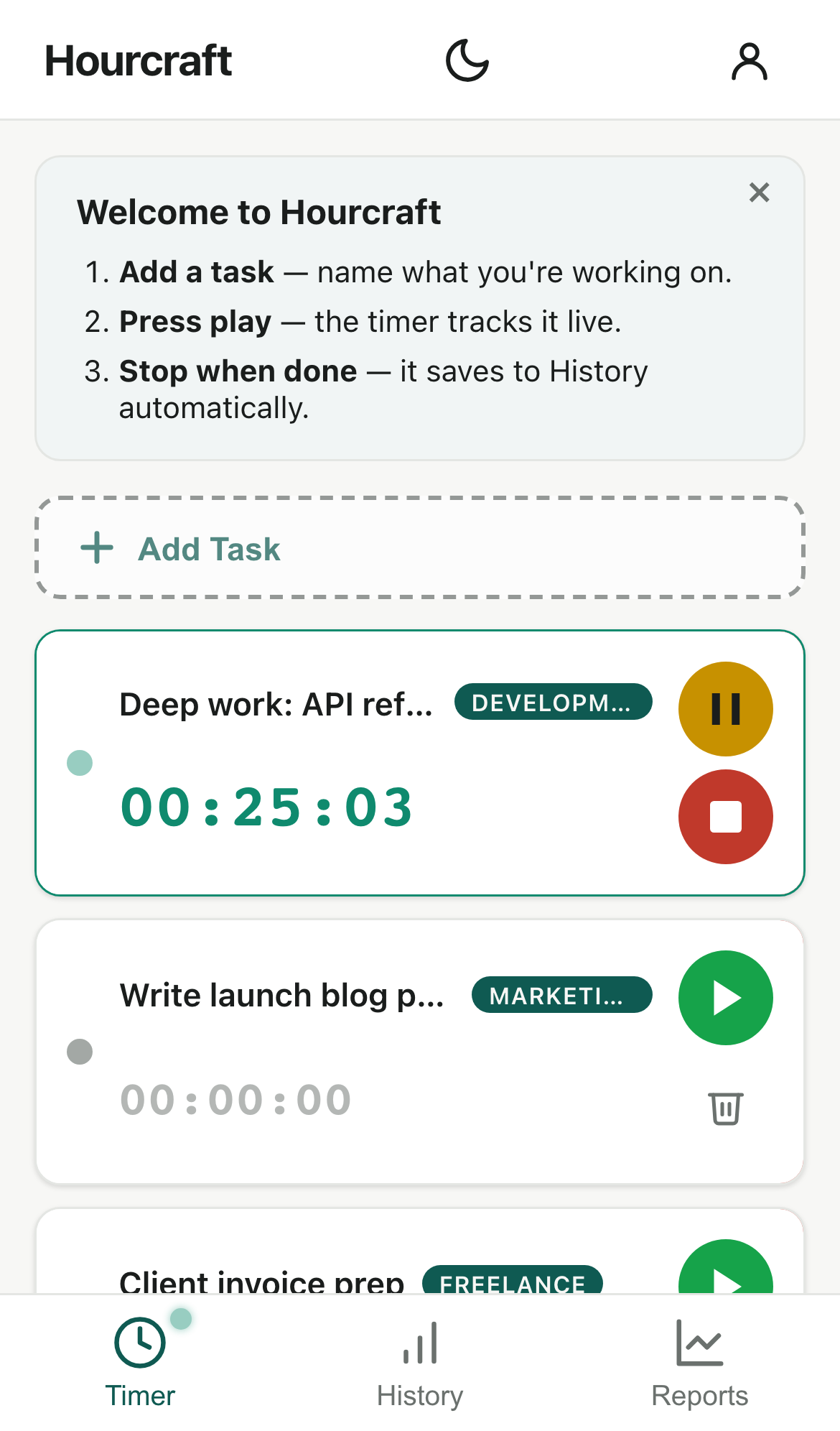
One tracker across Chrome, the web app, and your phone
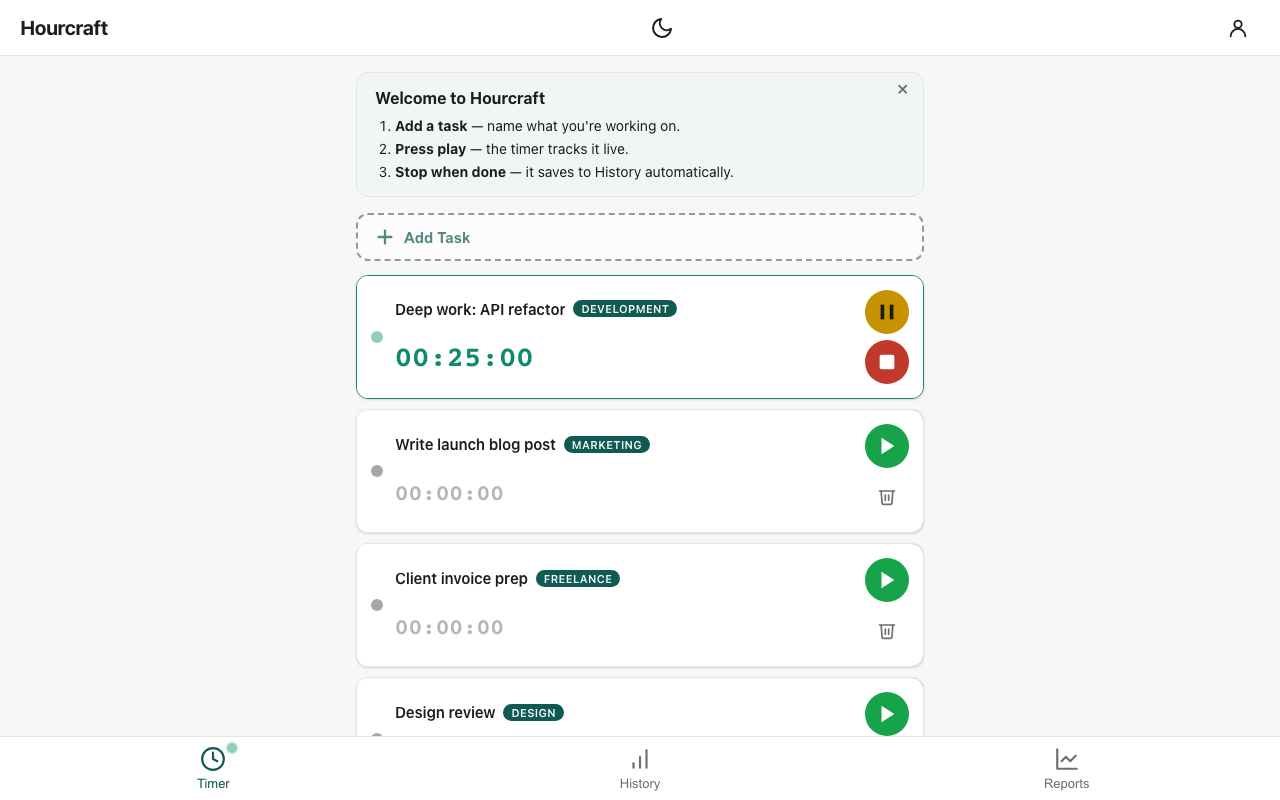
The extension is a complete time tracker on its own — tasks, timers, and history all live in the side panel, saved to the same account as the web app at hourcraft.app. Sign in once and your Chrome history and web history are one history. Add Pro’s cross-device sync and the running timer itself travels: start a task in the side panel and watch it counting on the web app — or on your phone — seconds later. Pause on one device, resume on another.
A Pomodoro timer in Chrome, too
With Hourcraft Pro, the side panel doubles as a Pomodoro timer: pick a task, run timed focus cycles with breaks between them, get a prompt (and an optional chime) when each cycle ends. Completed cycles are stamped onto the session — your Pomodoro work shows up in history and reports like everything else, not in a separate silo.
Set up in under a minute
- Add Hourcraft to Chrome from the Web Store — free, no credit card.
- Click the toolbar icon and choose Sign in — enter your email, click the magic link we send, and the extension signs itself in. No password to create, ever.
- Open the side panel and tap a task. That’s it — the badge starts counting.
Chrome extension questions
Does the extension work without the web app?
Yes — it’s a standalone time tracker: tasks, timers, and history all work right in the side panel. The web app at hourcraft.app adds the bigger screens — weekly summaries and reports — on the same account, whenever you want them.
Is it free?
Yes. Hourcraft is a free time tracking extension, and the Free plan is free forever — no credit card, just your email. Pro ($4/mo, $29/yr, or $59 once) adds cross-device sync, advanced reports, and Pomodoro mode. Details on the pricing page.
What permissions does it need?
Almost none: its own side panel and a connection to hourcraft.app. It cannot read your tabs, your browsing history, or the content of any page you visit. A time tracker doesn’t need to watch your browsing, so this one doesn’t ask to.
Can I use it as a Pomodoro timer in Chrome?
Yes — Pomodoro mode is part of Hourcraft Pro and runs right in the side panel: timed focus cycles on the task you pick, a prompt when each cycle ends, and an optional chime. Completed cycles are saved onto the session, so Pomodoro work shows up in your history and reports like everything else.
Is this a good Toggl alternative for Chrome?
Depends what you use. If you rely on Toggl for clients, invoicing, and team dashboards, keep Toggl. If what you actually open it for is the timer — start, stop, see where the hours went — Hourcraft is the lighter option: no projects to configure before your first timer, no permissions to read the sites you visit, and a $59 lifetime plan most trackers don’t offer. It takes under a minute to try.